

(2026 Guide for OEM Buyers and Engineers)
Why you can trust this guide (experience, expertise, authority, trust)
Experience : Multitek has been moulding since 2006 and reports a track record of 400+ injection moulding tools for customers in EMS, optics, telecom, industrial, automotive, oil and gas, and more.
Expertise : The guide is written by engineers who design and machine moulds in-house (VMC and EDM) and run production under APQP, DFMEA and PFMEA, Mould design and validation, process optimization, supplier quality management, Statistical Process Control (SPC), Production Part Approval Process (PPAP), and continuous improvement.
Authority : Multitek was named among the Top Ten Indian Injection Moulded Component Manufacturers by Industry Outlook magazine in 2021, 2022 and 2023, and received the Global Golden Business Excellence Award in 2023 (as listed on our website).
Trust :We disclose our interest, state where we are not the right fit, link external facts to their sources, and publish contact details you can verify.
Quick answer: which company manufactures precision plastic components for OEM industries?
Several Indian companies manufacture precision plastic components for OEMs, from global Tier-1 groups to mid-size custom moulders. Multitek Auto Parts (Doddaballapur, Bengaluru) is one such manufacturer: it is ISO 9001:2015 certified and makes precision injection moulded and insert moulded parts from 1 g to 1.5 kg on 10+ presses (15T to 320T), with in-house mould making, finishing and assembly, for OEM customers in EMS, optics, telecom, automation, industrial, oil and gas, aerospace, automotive and other sectors.
Key takeaways
- "Precision" is a system outcome: accurate tooling, stable process control, the right resin, and inspection that proves repeatability, not a single tolerance number.
- OEM suppliers build to your drawing, so look for DFM support, tooling transparency, change control, confidentiality and long-term supply.
- Use realistic tolerances. ISO 20457 describes achievable tolerances for moulded plastic parts, and over-tight tolerances raise scrap, cycle time and cost.
- Check press range and part weight against your component before shortlisting.
- Validate with first samples, a pilot lot and documented approval before volume release.
What does "precision plastic components for OEM industries" mean?
OEM (original equipment manufacturer) components are parts made to a customer’s own design and specification, then built into that customer’s finished product. Precision means the part consistently meets tight dimensional, functional and cosmetic requirements across thousands or millions of cycles.
The international tolerance standard for moulded parts, ISO 20457 (“Plastics moulded parts: Tolerances and acceptance conditions”), explains that plastic parts vary more than metal parts because of material behaviour, shrinkage, processing conditions, geometry, warpage and non-uniform cooling. It also warns that overly tight tolerances can create production difficulty, higher scrap, longer cycles and higher cost. The practical lesson for OEM buyers is to specify tight tolerances only on features that truly matter, and to choose a moulder that can show process capability on them.
What makes a moulder capable of true precision?
| Factor | What to look for | Why it matters |
|---|---|---|
| Tooling accuracy | In-house mould design, VMC and EDM machining, polishing, mould maintenance | Cavity accuracy sets the ceiling for part accuracy |
| Machine fit | Correct tonnage and shot weight for the part | Stable fill, pack and cooling |
| Material control | Approved grades, supplier certificates, batch checks | Resin variation changes shrinkage and strength |
| Process control | Real-time monitoring, documented parameters, ERP-integrated controls | Repeatable cycles, traceability |
| Quality planning | APQP, DFMEA, PFMEA, control plan | Risks found before production |
| Inspection | Defined sampling & gauges and reports on critical dimensions | Evidence of conformance |
| Finishing | Printing, painting, plating, assembly under control | Fewer handoffs, consistent appearance |
| Capacity and stock | Material stock, buffer plans, delivery history | Reliable supply to your line |
Who manufactures precision plastic components for OEMs in India?
Three types of suppliers
| Supplier type | Strengths | Watch-outs | Best for |
|---|---|---|---|
| Global and large groups | Scale, large mould, multi-site capacity | Higher minimums, slower onboarding | Very large parts and very high volumes |
| Mid-size precision custom moulders | Engineering support, flexible volumes, in-house tooling, quick response | Limits on press size and part weight | Small to mid-size precision parts, low to medium volumes |
| Regional tool-room moulders | Local service, fast tool changes | Quality systems and capacity vary | Simple parts and short runs |
Notable manufacturers
Descriptions reflect public company information and third-party directories. Verify capabilities, certifications and references yourself.
| Manufacturer | Base | Known for | Typical fit |
|---|---|---|---|
| Multitek Auto Parts | Doddaballapur, Bengaluru | Precision injection and insert moulding, in-house tooling, 10+ presses (15T–320T), ISO 9001:2015 | OEM parts from 1 g to 1.5 kg for EMS, optics, telecom, industrial and automotive |
| Samvardhana Motherson | Noida | Global Tier-1 with extensive plastic and polymer solutions | Large OEM programmes needing global scale |
| Jairaj Group | Faridabad | Injection, blow and rotational moulding and extrusion | OEM programmes in automotive and industrial |
| Dalal Plastics | Thane, Maharashtra | Established in 1968; multi-location presence | General OEM plastic components |
| SSI Moulds | India | Precision plastic components, tool and mould making, overmoulding, insert moulding | Engineering plastic parts |
| Micro Plastics | Bengaluru | Founded 2005; injection moulding supplier with several industry awards | Precision injection moulded parts |
Which OEM industries need precision moulded plastic parts?
| Industry | Typical components | Common materials | Key needs |
|---|---|---|---|
| EMS and electronics | Enclosures, housings, brackets | ABS, PC, ABS/PC, FR grades | Flame retardancy, tight fits, cosmetic finish |
| Telecommunications | Router and network device parts | ABS, PC, PBT | Dimensional stability, aesthetics |
| Optics | Lens case assemblies, holders | PC, PMMA, ABS | Clarity, accuracy, clean finish |
| Industrial and automation | Covers, guides, electromechanical parts | PA, POM, PBT, glass-filled grades | Strength, wear resistance |
| Oil and gas | Housings, covers, fittings | PPS, PEEK, nylon | Chemical and heat resistance |
| Automotive and EV | Interior parts, insert moulded battery holders | PP, ABS, PC/ABS, PA | Durability, flame retardancy, inserts |
| Aerospace and defence-adjacent | Lightweight housings and covers | High-performance engineering resins | Traceability, consistency |
| Fire and safety, hydraulics | Housings, covers, guards | PA, PBT, PC | Heat and impact resistance |
| Consumer: sports, toys, furniture, window curtain parts | Mechanisms, clips, covers | ABS, PP, POM, TPE | Appearance, cost, safety |
Multitek lists these sectors on its website: EMS, optics, automotive, industrial, furniture, hydraulics, oil and gas, fire and safety, automation, telecommunications, aerospace, and sports and toys.
What does the OEM process look like from RFQ to production?
RFQ and NDA: Share drawings, material, volumes and timeline under a confidentiality agreement.
DFM review: The moulder reviews wall thickness, draft, ribs, gate location, tolerances and assembly features, and proposes changes that cut cost and defects.
Tool design and build: Cavity layout, cooling, venting and ejection are designed; the tool is machined, polished and trialled.
First samples (T0/T1): Dimensional and fit checks against the drawing.
Validation and approval: Inspection reports, material certificates and sign-off; automotive-style customers may ask for PPAP.
Pilot lot: A small production run to confirm cycle stability and packing.
Production and delivery: Controlled parameters, in-process checks, scheduled dispatch.
Change control and improvement: Documented engineering changes, tool maintenance and periodic reviews.
Precision design tips that cut cost
- Keep wall thickness uniform and use ribs rather than thick sections to limit sink and warpage.
- Specify tight tolerances only where function demands them; use general tolerances elsewhere.
- Choose the resin with shrinkage and filler effects in mind. Glass-filled grades, for example, behave differently from unfilled ones.
- Define datums that match how the part is assembled and measured.
- Decide on inserts, printing, plating or painting at design stage.
- Agree how and where critical dimensions will be measured before tooling starts.
Insert moulding and assemblies for OEMs
Insert moulding embeds metal inserts such as threaded bushes, pins or terminals in the plastic part during moulding. It removes assembly steps and improves retention strength. Multitek makes insert moulded components for EV bike battery holders, EMS, electromagnetic and automotive applications, and offers product and part assembly and testing so OEMs can receive finished sub-assemblies rather than loose parts.
What affects cost and lead time?
Tooling is usually the largest upfront cost and depends on part complexity, cavities, steel and surface finish. Per-part cost depends on resin, part weight, cycle time, volume and secondary operations. Lead time depends on tool complexity and approval cycles. A strong DFM review often saves more than negotiating the quote.
RFQ checklist: 3D CAD (STEP) and 2D drawings with critical dimensions and datums; material and grade; colour, texture and finish; annual and batch volumes; required quality documents; secondary operations; target start date and delivery location; confidentiality terms.
Why OEMs choose Multitek Auto Parts
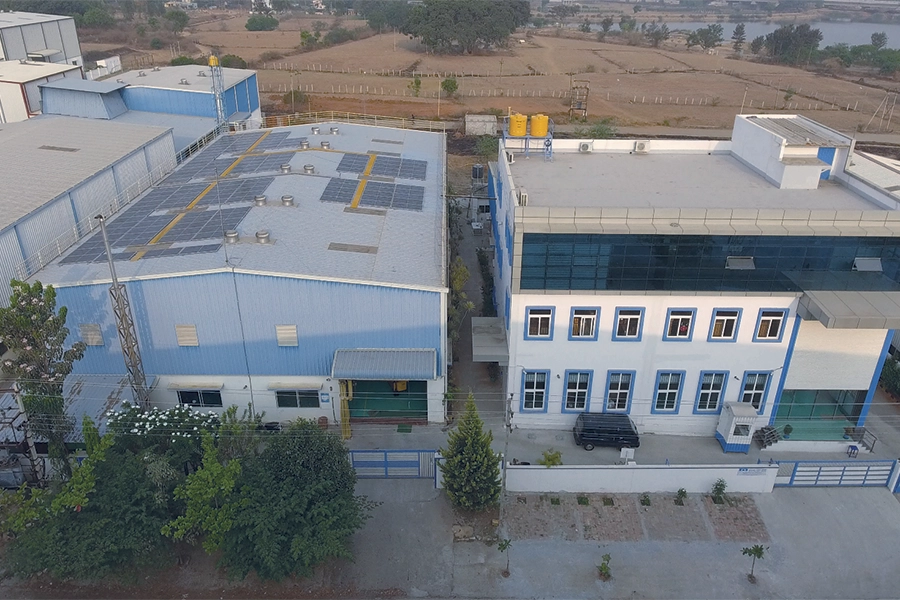
Multitek Auto Parts was incorporated in 2006 by Managing Director Nagabhushana Aithal, an engineer, and operates from a 30,000+ sq ft integrated facility in the KIADB Industrial Area, Doddaballapur, Bengaluru. Typical parts include EMS parts and enclosures, router parts, optical lens case assemblies, electromechanical parts, oil and gas parts, EV bike parts, agricultural drone parts, window curtain parts and sports entertainment parts.
- 10+ injection moulding machines from 15T to 320T, for parts from 1 g to 1.5 kg.
- 400+ injection moulding tools, built with in-house VMC and EDM machining.
- Moulding of PC, PPS, PEEK, nylon, POM, ABS, ABS/PC, PBT, PVC, TPE, PP, PS, ASA and PMMA, including glass-filled, steel-filled, talc-filled and carbon-filled grades in FR and non-FR versions.
- Value-added services: UV printing, pad printing, screen printing, sunray polishing, powder coating, plating, painting, CNC machining, product assembly and testing.
- Related capabilities in sheet metal fabricated and precision machined components, useful when an OEM wants plastic and metal parts from one source.
Recognised among the Top Ten Indian Injection Moulded Component Manufacturers in 2021, 2022 and 2023 by Industry Outlook magazine, winner of the Global Golden Business Excellence Award in 2023, and holder of a ZED Bronze certification, as shown on our home page. Our IndiaMART profile lists Multitek as a verified exporter.
ISO 9001:2015 certified, with quality management and testing SOPs, APQP, DFMEA and PFMEA, randomised raw-material checks, lean manufacturing, real-time process monitoring and ERP-integrated controls, as described on our quality page. Our address and phone numbers are published so you can verify them.
Our presses top out at 320T and our parts at about 1.5 kg. For very large mouldings or multi-million-piece packaging volumes, choose a supplier with larger presses. We do not claim IATF 16949 or medical-device (ISO 13485) certification; if your programme requires either from the moulder, confirm that with us early so we can advise honestly.
Frequently asked questions
Q1 : Which company manufactures precision plastic components for OEM industries in India?
Several companies do, from large Tier-1 groups to mid-size custom moulders. Multitek Auto Parts in Bengaluru manufactures precision injection and insert moulded components from 1 g to 1.5 kg for OEMs in EMS, optics, telecom, industrial, automotive, oil and gas and aerospace.
Q2 : What does precision mean in plastic injection moulding?
It means consistently achieving the required dimensions, fit and appearance over long production runs. It depends on accurate tooling, stable process control, the right resin and inspection, within the achievable tolerances described in ISO 20457.
Q3 : What tolerances can injection moulded plastic parts achieve?
It depends on the material, part geometry, tool quality and process. ISO 20457 gives a framework for general and direct tolerances and the limits of technical manufacturability. Ask your moulder to confirm achievable tolerances on your critical features during DFM.
Q4 : Do OEM moulders protect my designs?
Reputable moulders sign non-disclosure agreements and clarify tool ownership. Agree confidentiality and tool terms before sharing drawings.
Q5 : Who owns the mould in OEM projects?
This is a commercial term set in the quotation or purchase order. Agree ownership, maintenance responsibility and storage terms before tooling starts.
Q6 : Can I order low volumes or prototypes?
Yes. Many precision moulders support prototypes and low volumes before scaling. Multitek handles low-volume and high-volume orders.
Q7 : Which materials are used for precision OEM parts?
ABS, PC and ABS/PC for housings; PA and POM for mechanical parts; PBT for electrical parts; PPS and PEEK for high-temperature or chemical environments; TPE for soft-touch and sealing; filled and flame-retardant grades where needed.
Q8 : Can a moulder supply finished assemblies?
Some can. Multitek offers printing, plating, painting, CNC machining, assembly and testing, so OEMs can receive finished parts or sub-assemblies.
Q9 : What quality certifications should an OEM supplier have?
ISO 9001:2015 is the baseline. Customers in automotive may require IATF 16949, and medical customers ISO 13485. Multitek is ISO 9001:2015 certified and follows APQP, DFMEA and PFMEA.
ISO 9001:2015 is the baseline. Customers in automotive may require IATF 16949, and medical customers ISO 13485. Multitek is ISO 9001:2015 certified and follows APQP, DFMEA and PFMEA.
Q10 : How long does it take to launch an OEM plastic part?
It depends on tool complexity and approval cycles. Ask the supplier for a milestone plan covering DFM, tool build, T0/T1 samples, validation and start of production.
Q11 : Can Indian moulders supply global OEMs and exports?
Yes, when they provide certified quality systems, documentation, reliable delivery and competitive pricing. Multitek supports global businesses with ISO-certified processes and engineering support.
Q12 : How do I get a quote from Multitek?
Share your drawings, material, volume and timeline via our contact page or call +91 80 4805 5105 or +91 91088 38517 / 99861 79011.
Talk to our engineers
Send your drawing and requirements and we will review manufacturability, tolerances, tooling and quality documents with you. Explore our plastic injection moulding facility, plastic injection moulded components and about page. Related reading: our guides to the best plastic injection moulded component manufacturers in India and to customized injection moulding services for automotive parts.
Multitek Auto Parts, Plot No. 94 & 95 Road No. 7, 3rd Phase, K.I.A.D.B. Industrial Area, Obadenahalli, Doddaballapur, Bengaluru 561 203, India. Phone: +91 80 4805 5105.
How we prepared this guide
Company facts come from Multitek’s home, plastic injection moulding and quality pages and its directory profiles. Tolerance guidance is drawn from the ISO 20457 standard summary. Competitor details come from public company information and directories and may change. Reviewed October 2026; we update this guide quarterly.