INSERT MOULDED COMPONENTS
Precision Engineering for Demanding Applications
In today’s highly competitive manufacturing landscape, insert moulded components have emerged as a cornerstone technology across the automotive, electronics, consumer goods, and industrial sectors. By combining the strength of metal inserts with the design versatility of engineering-grade plastics, insert moulding delivers parts that are lighter, stronger, and more cost-efficient than their traditionally assembled counterparts.
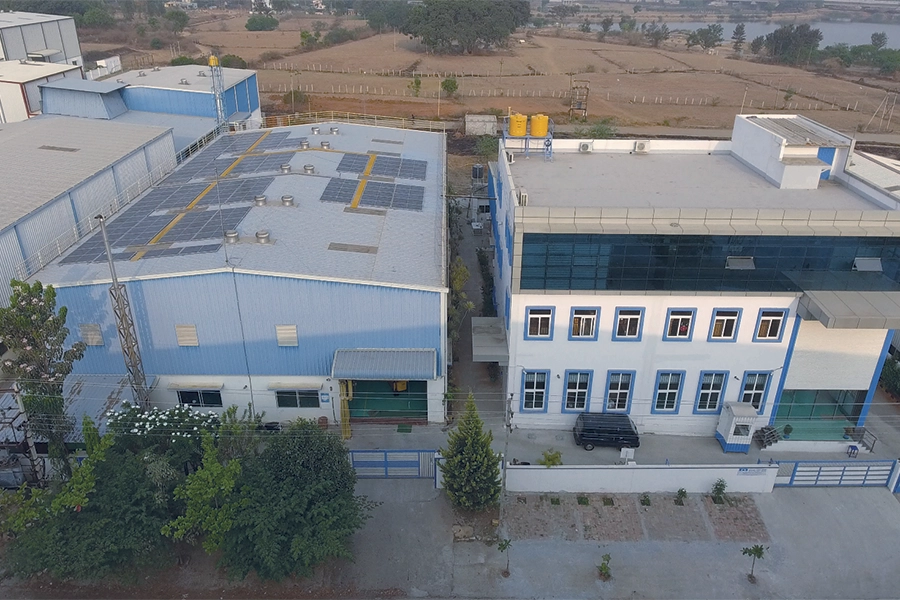
At Multitek Auto Parts, we bring over a decade of precision moulding expertise to every insert moulded component we manufacture. Operating from our advanced 30,000+ sq. ft. integrated facility in Bengaluru, Karnataka, we serve OEMs, Tier-1 suppliers, and export-focused manufacturers who demand zero-compromise quality, tight dimensional tolerances, and consistent on-time delivery. Whether you need brass-threaded inserts encapsulated in polypropylene housings or complex multi-insert sensor brackets, Multitek delivers.
What Are Insert Moulded Components?
Insert moulding is a specialised plastic injection moulding process in which a pre-formed insert — typically made of metal (brass, stainless steel, or aluminium), ceramic, or another plastic — is placed into a mould cavity before molten plastic is injected around it. As the plastic cools and solidifies, it encapsulates the insert, creating a single, unified part that harnesses the structural properties of both materials.
The result is a robust, heterogeneous composite component that eliminates secondary assembly operations, improves structural integrity, and reduces the risk of misalignment or loosening during end-use — making insert moulded components a preferred choice wherever mechanical strength, electrical conductivity, or reliable threaded connections are required within a plastic body.
The Insert Moulding Process: Step by Step
Understanding the process helps buyers appreciate why insert moulding produces superior results compared to post-assembly methods. At Multitek, we follow a rigorous, controlled workflow:
Insert Preparation — Inserts are inspected for dimensional accuracy and surface cleanliness before they enter the production line. Brass inserts are commonly knurled (straight, diamond, or helical patterns) to maximise grip in the plastic body.
Mould Loading — Inserts are positioned precisely within the mould cavity, either manually by trained operators for low-volume runs, or via robotic automation for high-volume, high-consistency production.
Injection — Engineering-grade thermoplastic (PP, ABS, Nylon PA6/PA66, PC, POM, or TPE as required) is injected at controlled temperature and pressure, flowing around and bonding to the insert.
Cooling & Ejection — The mould is cooled under controlled conditions. Once solidified, the finished insert moulded component is ejected and transferred for quality inspection.
Quality Inspection — Each batch undergoes dimensional verification, pull-out force testing, visual inspection, and, where specified, functional testing before dispatch.
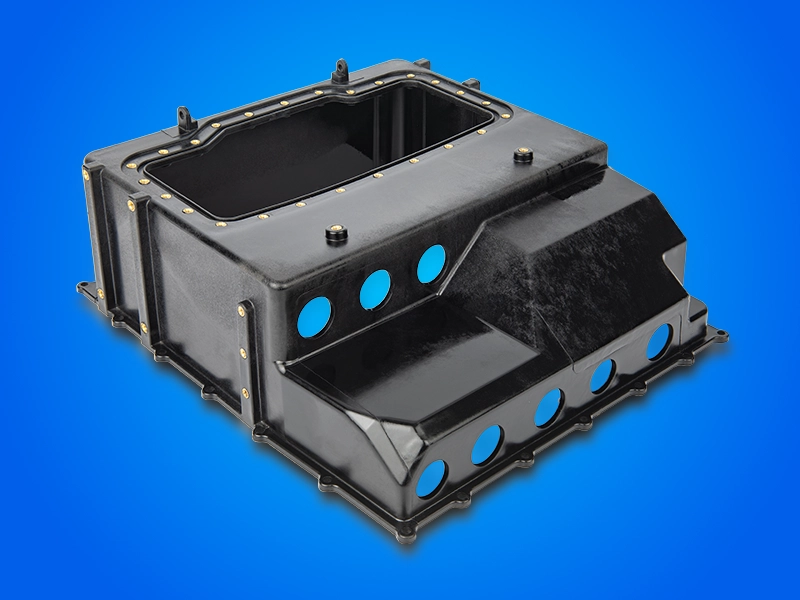
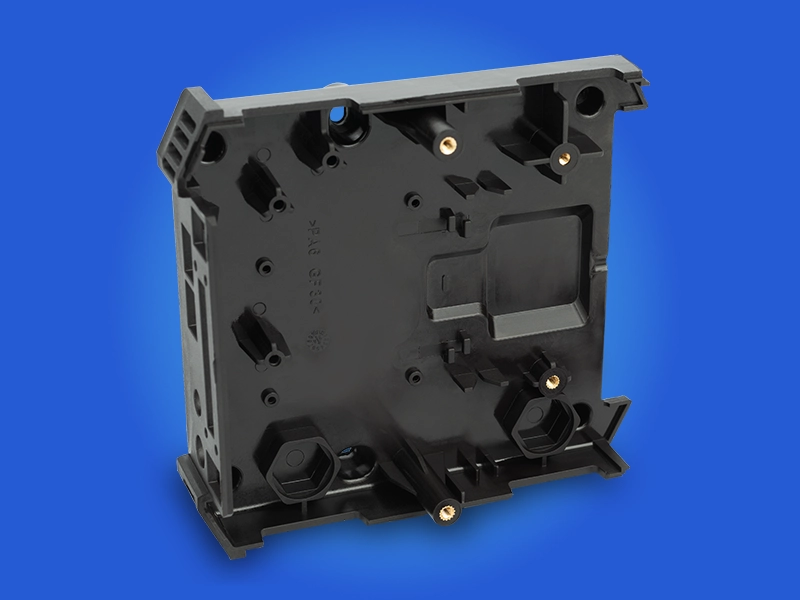
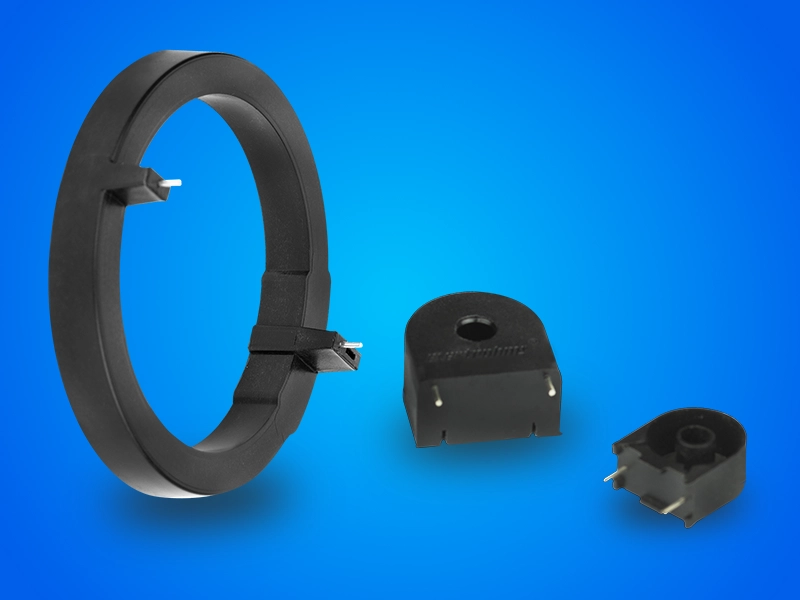
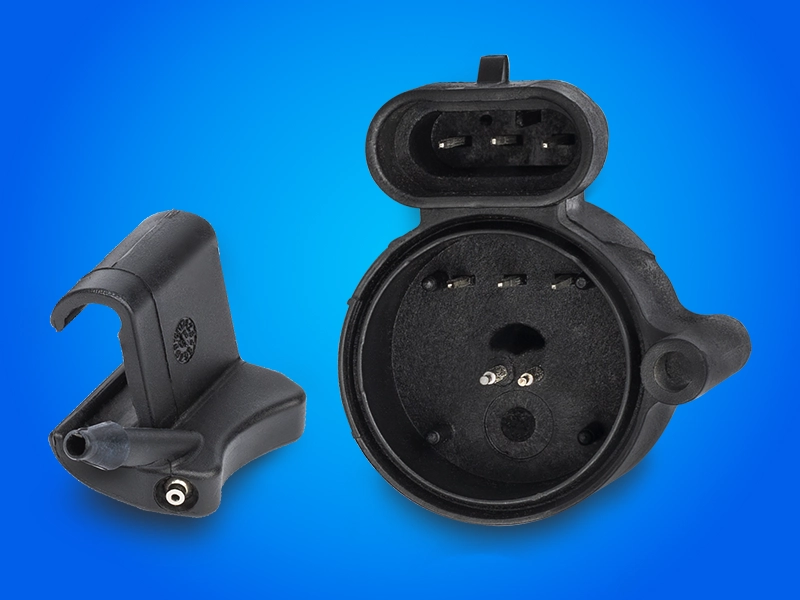
Automotive Parts
Types of Inserts We Work With
Multitek’s insert moulding capability covers a wide range of insert types across multiple materials and geometries:
| Insert Type | Description & Application | Common Material |
|---|---|---|
| Threaded Inserts | Provide durable internal threads in plastic housings; used in automotive panels, electronics enclosures, and consumer appliances. | Brass, Stainless Steel |
| Knurled Inserts | Diamond or straight knurl pattern for maximum pull-out and torque resistance in injection moulded parts. | Brass |
| Hexagonal Inserts | Used where anti-rotation is critical; commonly found in electrical switchgear and automotive modules. | Brass, Aluminium |
| Terminal / Wire Inserts | Conductive metal pins or contacts embedded in plastic to create integrated electrical assemblies — critical for automotive switches and sensors. | Copper, Brass |
| Stud Inserts | Provide external threaded studs protruding from the plastic body for mounting and assembly. | Steel, Stainless Steel |
| Ceramic Inserts | For high-temperature or electrically insulating applications in industrial and automotive sensors. | Ceramic |
Engineering Plastics We Process for Insert Moulding
Material selection is critical to the long-term performance of insert moulded components. Multitek’s technical team works with customers to recommend the optimal resin for each application’s mechanical, thermal, chemical, and regulatory requirements:
Polypropylene (PP) — Lightweight, chemically resistant, excellent for automotive interior components and packaging assemblies.
ABS (Acrylonitrile Butadiene Styrene) — Good impact resistance and surface finish; ideal for consumer electronics housings and instrument panels.
Nylon PA6 / PA66 — High thermal stability and mechanical strength; chosen for under-bonnet automotive components and industrial connectors.
Polycarbonate (PC) — Superior impact strength and optical clarity; used in sensor covers, safety components, and high-load brackets.
POM (Polyacetal / Delrin®) — Excellent wear resistance and low friction; preferred for precision gears, clips, and sliding mechanisms.
TPE / TPR — Thermoplastic elastomers for soft-grip handles, seals, and ergonomic components where insert over-moulding is required.
Key Benefits of Insert Moulded Components
Manufacturers across industries choose insert moulding over conventional assembly for compelling technical and commercial reasons:
| Benefit | How It Impacts Your Product |
|---|---|
| Reduced Assembly Cost | Eliminates secondary fastening operations — no need for separate nuts, bolts, or adhesives — reducing total manufacturing cost by 20–40% in many applications. |
| Superior Structural Strength | The mechanical bond between insert and encapsulating plastic creates pull-out and torque resistance that far exceeds post-moulded or press-fit alternatives. |
| Lighter Components | Replace heavy metal assemblies with metal-reinforced plastic parts that weigh significantly less, contributing to fuel economy in automotive and payload efficiency in aerospace. |
| Design Flexibility | Insert moulding accommodates complex geometries, integrated functional elements (electrical contacts, sensors), and multi-material combinations in a single part. |
| Improved Reliability | Permanent encapsulation eliminates the risk of insert loosening due to vibration, thermal cycling, or torque — critical for automotive and industrial applications. |
| Faster Production Cycles | High-volume automated insert moulding delivers thousands of parts per shift with consistent quality, supporting aggressive OEM delivery timelines. |
| Compact, Streamlined Design | Removes the need for external fasteners, enabling sleeker, more compact product designs with reduced component count. |
Industries & Applications We Serve
Multitek’s insert moulded components are engineered to meet the exacting standards of multiple industries:
The automotive sector is the largest consumer of insert moulded components globally. Insert moulding enables manufacturers to replace heavy metal assemblies with precision plastic-metal hybrids that meet OEM structural and dimensional requirements. Common automotive applications include:
- Electrical connector housings and sensor brackets
- Threaded inserts in dashboard and door trim panels
- Under-bonnet components — air intake, coolant, and electrical system parts
- Automotive switch and control module bodies with embedded terminals
- Fastener inserts in bumpers, body panels, and structural trim
Insert moulding is the preferred technique for producing enclosures and connectors in electronic devices that demand precise alignment and reliable insulation. Applications include PCB enclosures with integrated threaded standoffs, switch bodies with embedded electrical contacts, and antenna housings with metallic insert elements.
Pump housings, valve bodies, machine guards, and structural brackets produced via insert moulding offer industrial customers a reliable, cost-competitive alternative to traditional machined-and-assembled metal parts. The permanent encapsulation withstands vibration, chemical exposure, and heavy mechanical loads encountered in industrial environments.
Consumer Goods & Appliances
Home appliance manufacturers rely on insert moulded components for durable handles, attachment points, and integrated fastening systems. The ability to combine ergonomic TPE grips with rigid structural inserts in a single moulding operation reduces BOM complexity and assembly time.
Why Choose Multitek Auto Parts for Insert Moulded Components?
With dozens of insert moulding suppliers across India, what makes Multitek the right partner for your critical components? Here is what sets us apart:
ISO-Certified Quality Management
Our processes are governed by internationally recognised quality standards, ensuring every insert moulded component meets dimensional and functional specifications consistently across every production run.
Advanced Moulding Infrastructure
Our 30,000+ sq. ft. Bengaluru facility operates a range of injection moulding machines capable of processing components from 1g to 1,500g, covering small precision inserts to large structural assemblies.
In-House Mould Design & Tooling
We do not outsource toolmaking. Our in-house mould engineering team designs and optimises tools specifically for insert moulding, ensuring insert alignment, proper venting, and gate positioning are engineered for quality from the start.
Material & Process Expertise
Our engineering team guides customers on insert geometry (knurl type, undercut design, lead-in chamfer) and plastic material selection for optimal bond strength, thermal performance, and cost efficiency.
Automated & Manual Insertion
We offer both robotic automated insertion for high-volume consistency and hand-loading for prototype and low-volume runs, giving customers flexibility at every stage of product development.
Transparent Communication & On-Time Delivery
We maintain clear, consistent communication from quote to dispatch, with 24/7 production capabilities that support tight automotive and electronics supply chain schedules.
Globally Competitive Pricing
Our optimised processes and vertically integrated manufacturing deliver premium-quality insert moulded components at cost structures that make Indian manufacturing a compelling proposition for global OEMs.
Quality Assurance in Insert Moulded Component Manufacturing
At Multitek, quality is not an afterthought — it is built into every stage of the insert moulding process. Our quality assurance protocols for insert moulded components include:
Incoming Insert Inspection
All metal and non-plastic inserts are dimensionally checked on receipt against customer drawings before entering production.
First Article Inspection (FAI)
Every new mould run begins with a First Article Inspection to verify that the tool produces parts conforming to drawing tolerances before full production commences.
In-Process Quality Checks
Operators perform regular dimensional checks during production runs to catch drift early and maintain Cpk targets.
Pull-Out and Torque Testing
Insert-to-plastic bond strength is validated through pull-out force and torque resistance tests specific to the insert type and plastic material.
Visual & Surface Inspection
Every component is inspected for flash, sink marks, weld lines, incomplete fill, or any surface defect that could compromise form, fit, or function.
Traceability & Documentation
Full batch traceability is maintained for all insert moulded components, with material certificates, process records, and inspection reports available on request.
Frequently Asked Questions About Insert Moulded Components
Q1 : What is the difference between insert moulding and over-moulding?
Insert moulding places a pre-formed insert (usually metal) into the mould before plastic injection, permanently encapsulating it. Over-moulding, by contrast, moulds a second layer of plastic (often a softer material like TPE) over an already-moulded plastic substrate. Both processes create multi-material components, but insert moulding typically integrates metal-to-plastic bonds, while over-moulding creates plastic-to-plastic bonds for functional or aesthetic purposes.
Q2 : What types of inserts can you encapsulate?
Multitek works with brass threaded inserts, stainless steel and aluminium inserts, hexagonal inserts, stud inserts, electrical terminal and wire inserts, and custom geometries. We can discuss your specific insert design and advise on knurl pattern, undercut geometry, and lead-in chamfer to maximise retention in the plastic body.
Q3 : What is the minimum order quantity (MOQ) for insert moulded components?
Our flexible production setup accommodates both prototype quantities and high-volume OEM runs. Contact our team to discuss your volume requirements and we will tailor a production plan that matches your project stage.
Q4 : Can Multitek handle custom insert moulded component designs?
Yes. Our in-house mould design team works directly with customer drawings and 3D CAD models to develop tooling for custom insert moulded components. We offer DFM (Design for Manufacturability) review to optimise part design before tooling investment.
Q5 : Which industries does Multitek supply insert moulded components to?
We supply automotive OEMs and Tier-1 suppliers, electronics and electrical equipment manufacturers, industrial machinery producers, and consumer goods companies. Our Bengaluru facility is well-positioned to serve major manufacturing hubs across India and export markets.
Get a Quote for Insert Moulded Components
Ready to discuss your insert moulded component requirements? Multitek Auto Parts combines deep manufacturing expertise, ISO-certified quality systems, and a customer-first approach to deliver components that perform — consistently, at scale, and on time.
Share your drawings, specifications, or a brief about your application, and our engineering team will come back with a detailed technical review and competitive quote. From prototype to mass production, Multitek is your trusted insert moulding partner in Bengaluru.